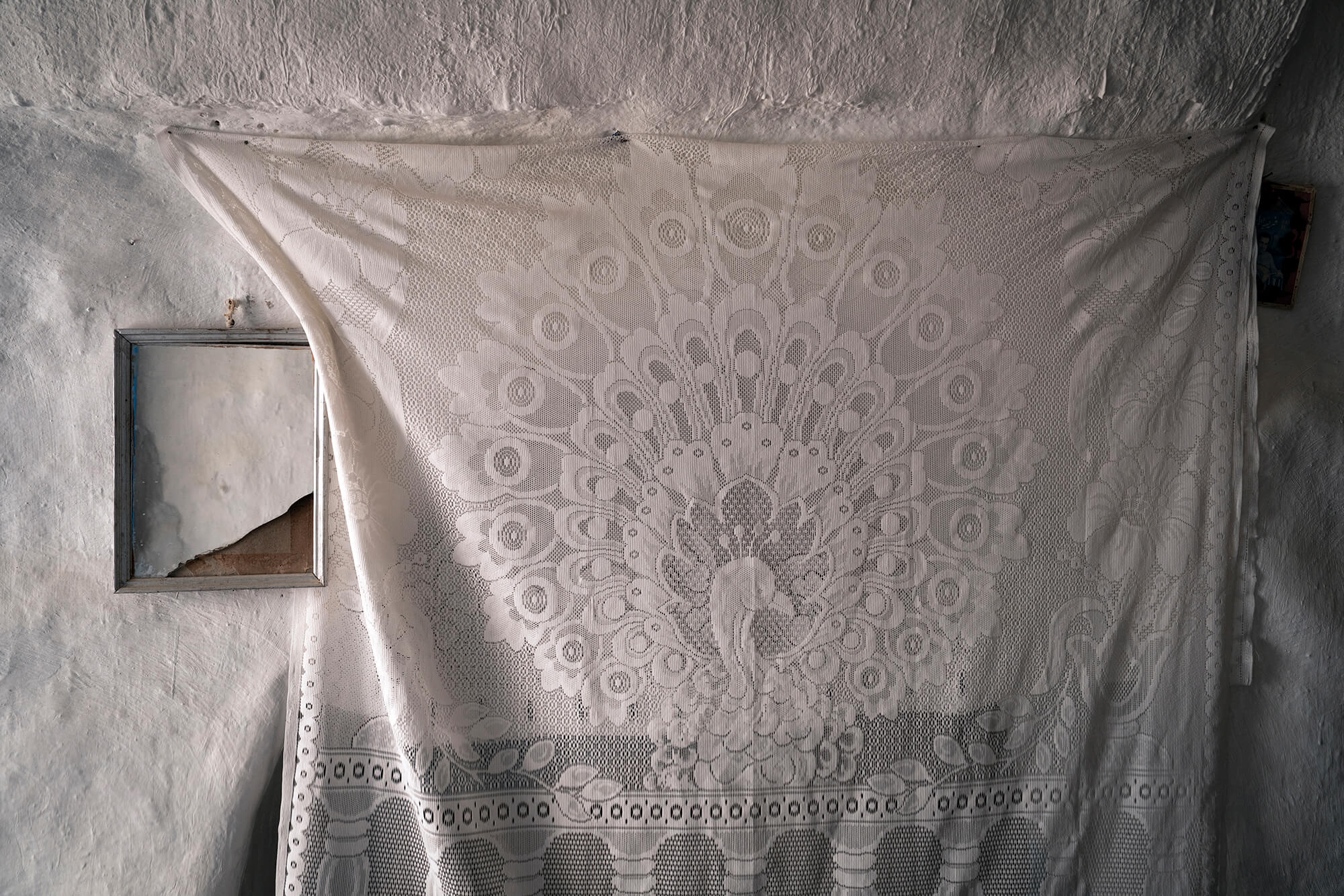
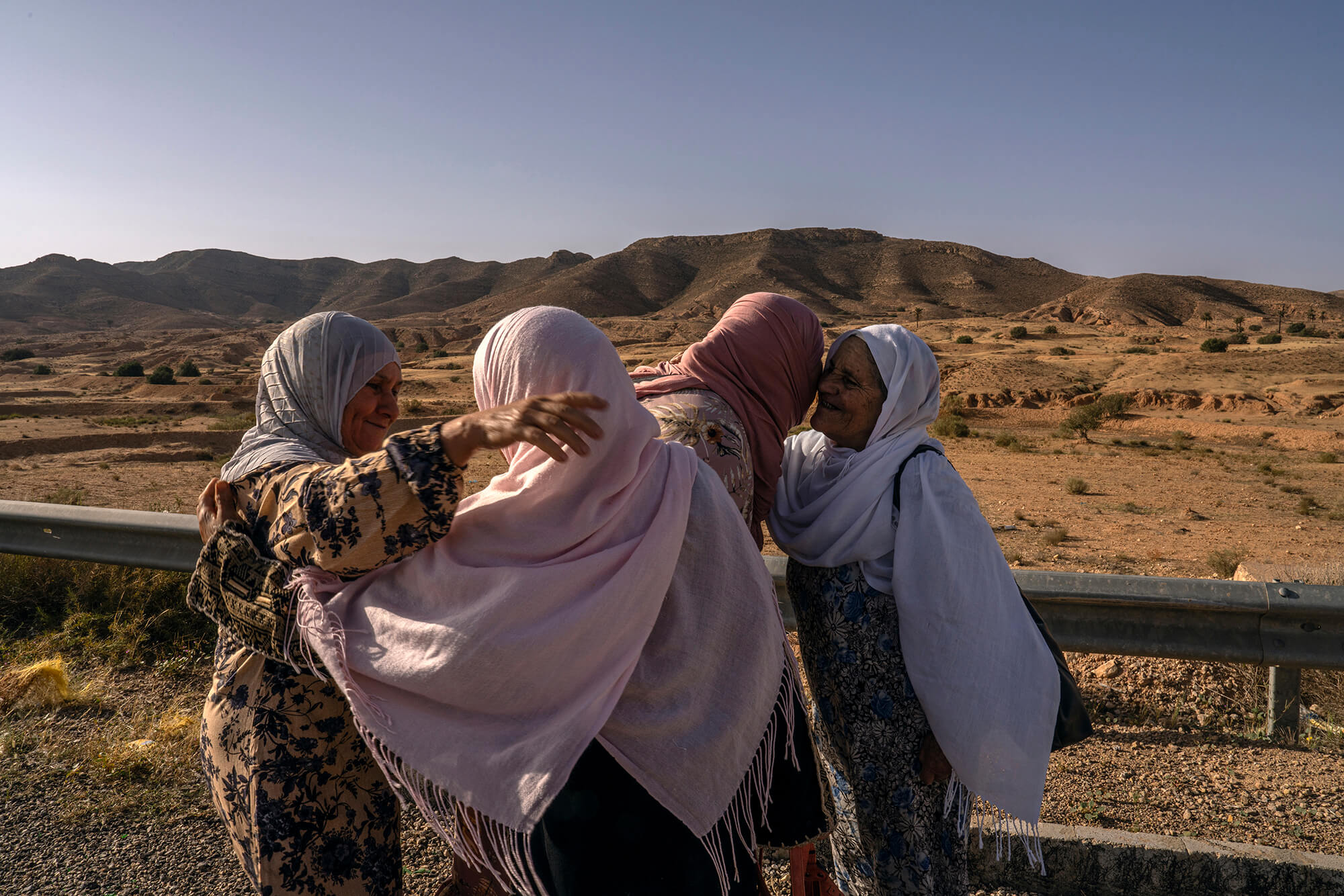
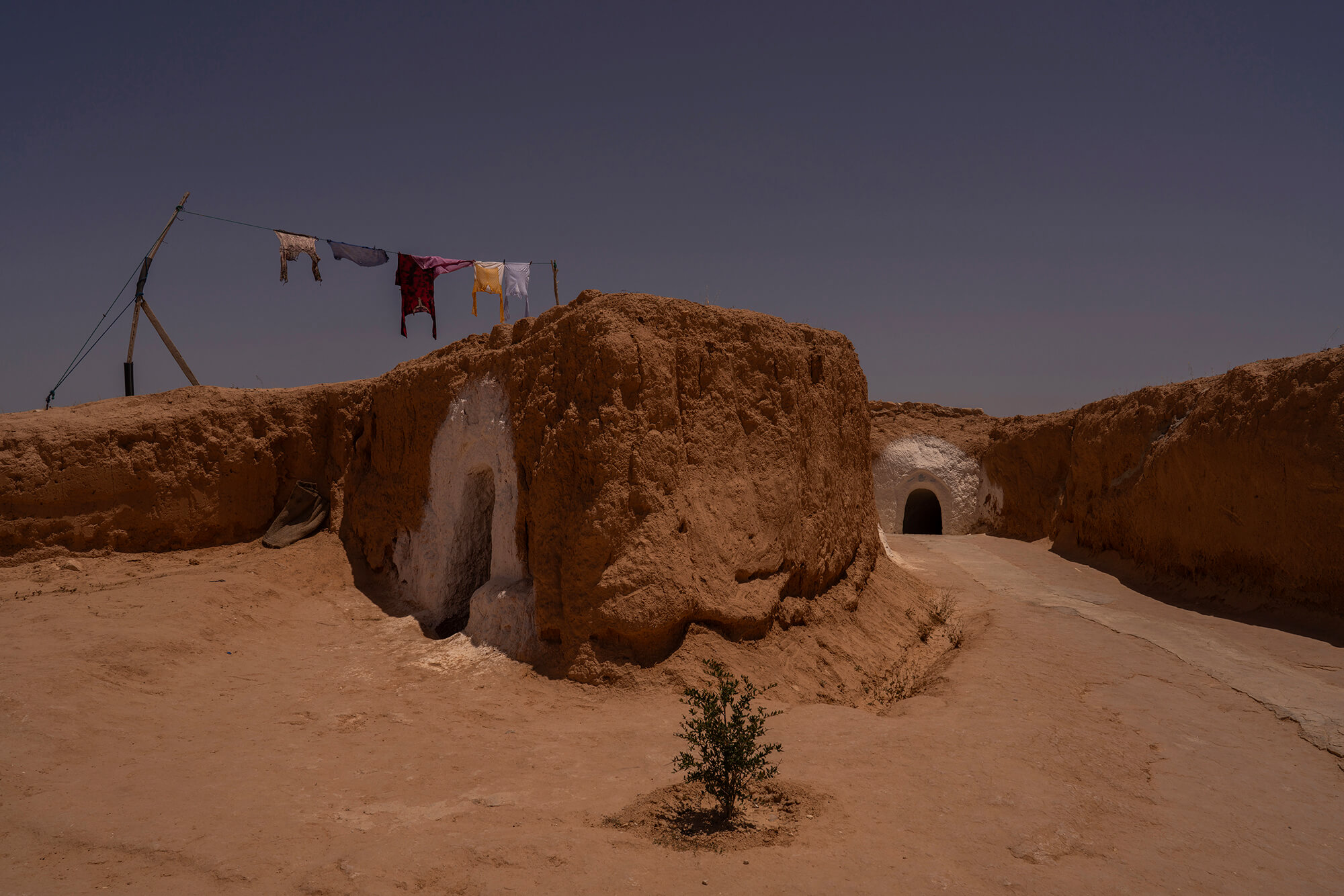
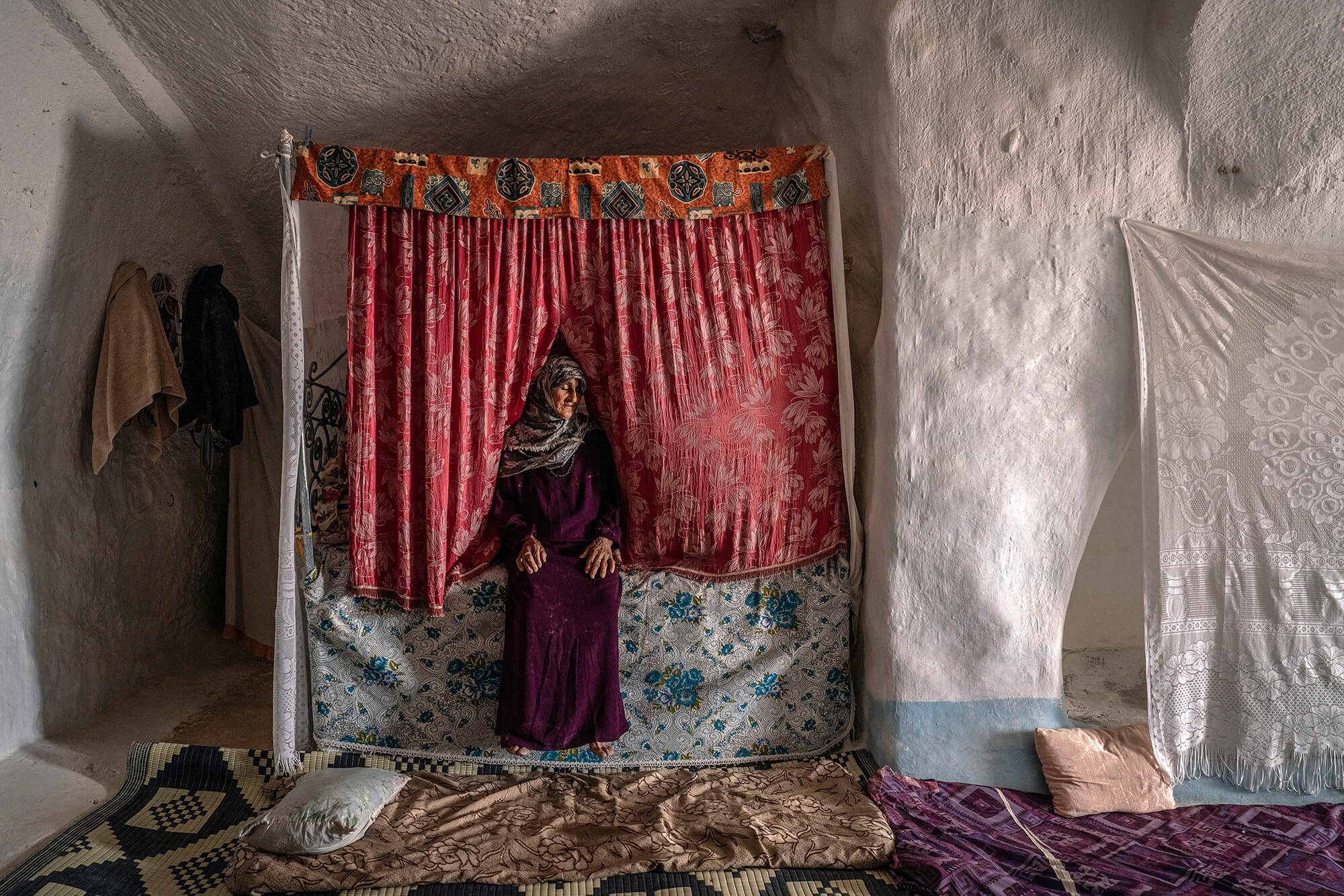
Beni Aïssa 2023
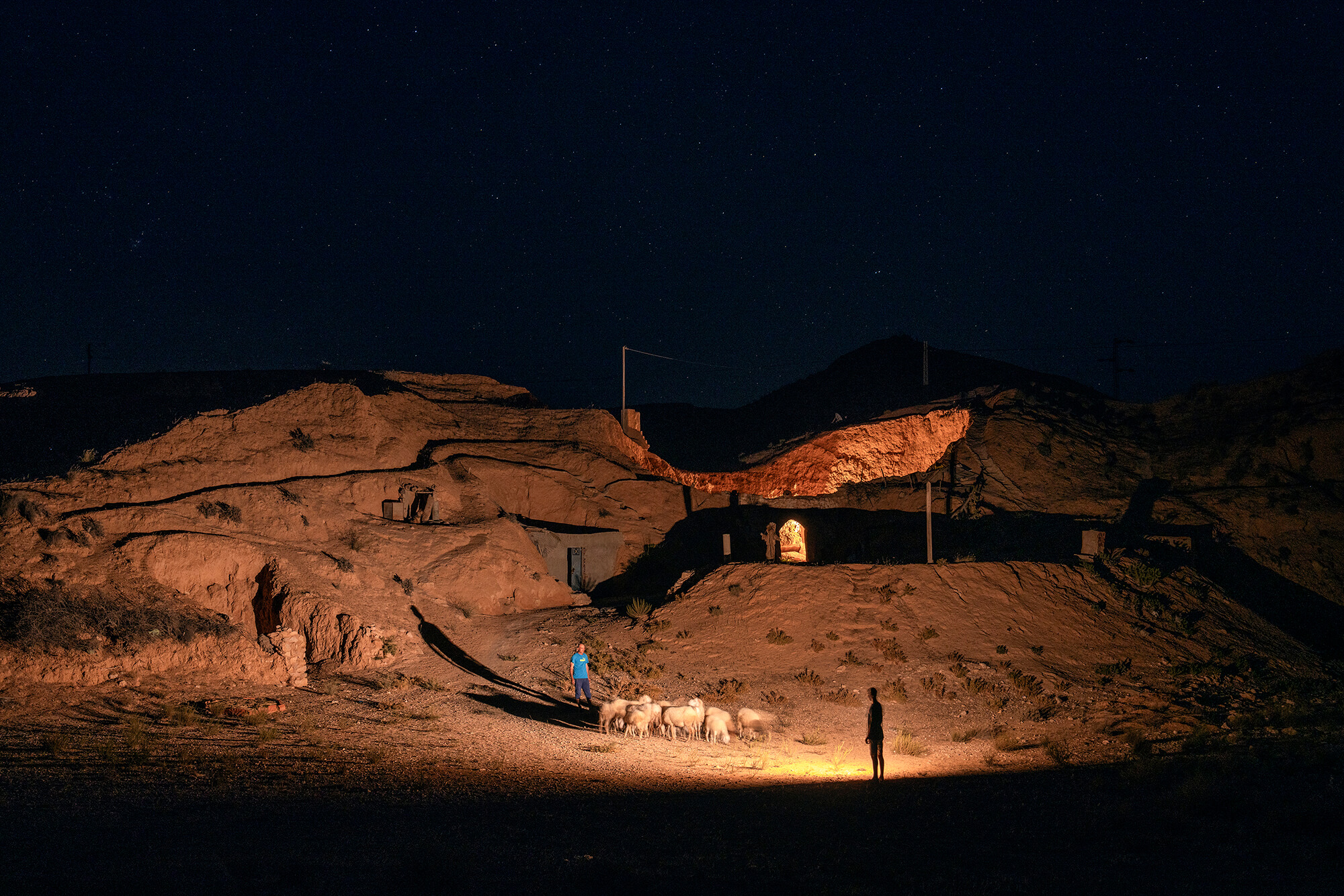
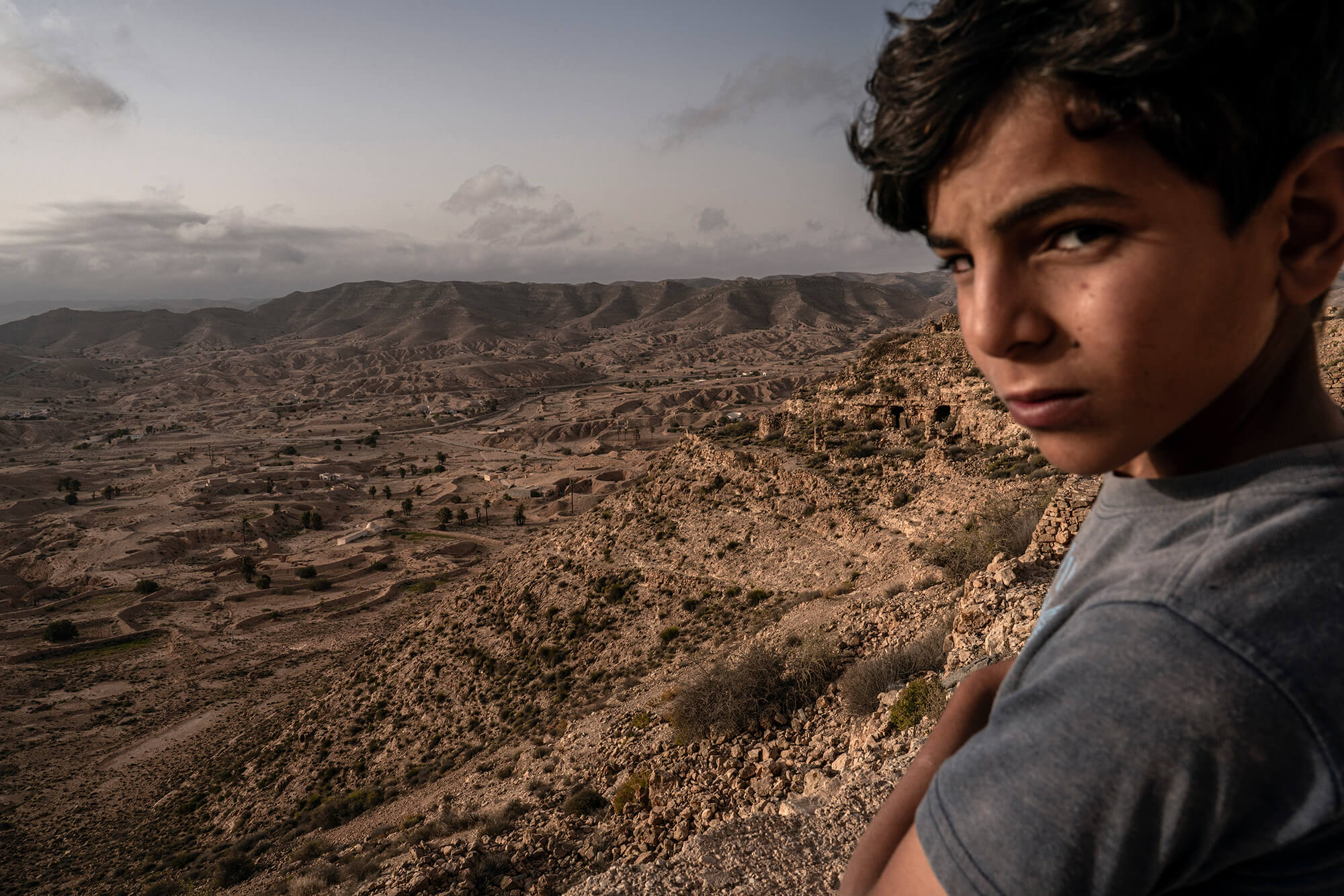
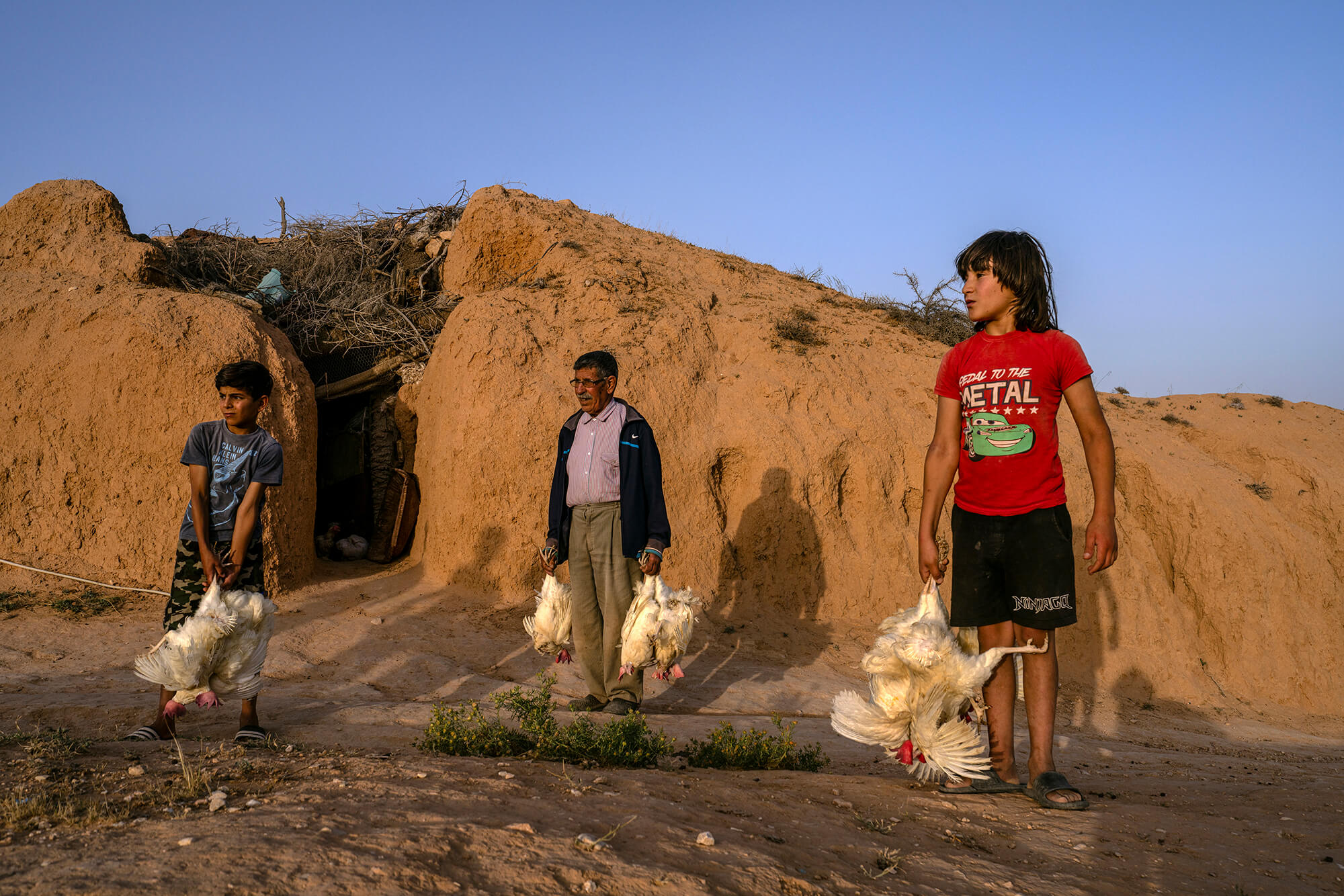
For thousands of years, the Imazighen—also known as Berbers—in southern Tunisia have built their homes by chiseling into the low-slung sandstone hillsides that run through the wide plains of the Sahara. These cave shelters offered a cool escape from the searing heat and harsh desert winds. Then the national government suggested there might be a better way to live.
It all started when Tunisia gained independence from France in 1956 and the new president, Habib Bourguiba, began pushing for the country to modernize, which meant moving cave-dwelling Imazighen into government-built housing aboveground. The people were promised cheap running water and electricity, though many who relocated soon found that wasn’t the case. “They lied to us,” says Slimen Ben Massoud, a 72-year-old who was born in a cave but moved to one of the government settlements in the 1970s. “They took everything from me and gave me nothing in return.”
Other attempts at relocation have been somewhat more successful. After a flood destroyed many of the homes around Matmata and Haddej in 1969, residents were offered land at nearby New Matmata for three dinars—a dollar—a square meter. For many, it was an offer too good to pass up. Today there’s one main road through the town, lined by a string of packed coffee shops, a butcher, and an arcade with a few gaming consoles set up in front of flat-screen televisions. But the town still fails to address the one problem the cave homes solved thousands of years ago: the heat. Tunisia, like much of the rest of the world, is heating up at an alarming rate, and temperatures are expected to rise by as much as 11.7 degrees Fahrenheit by the end of the century.
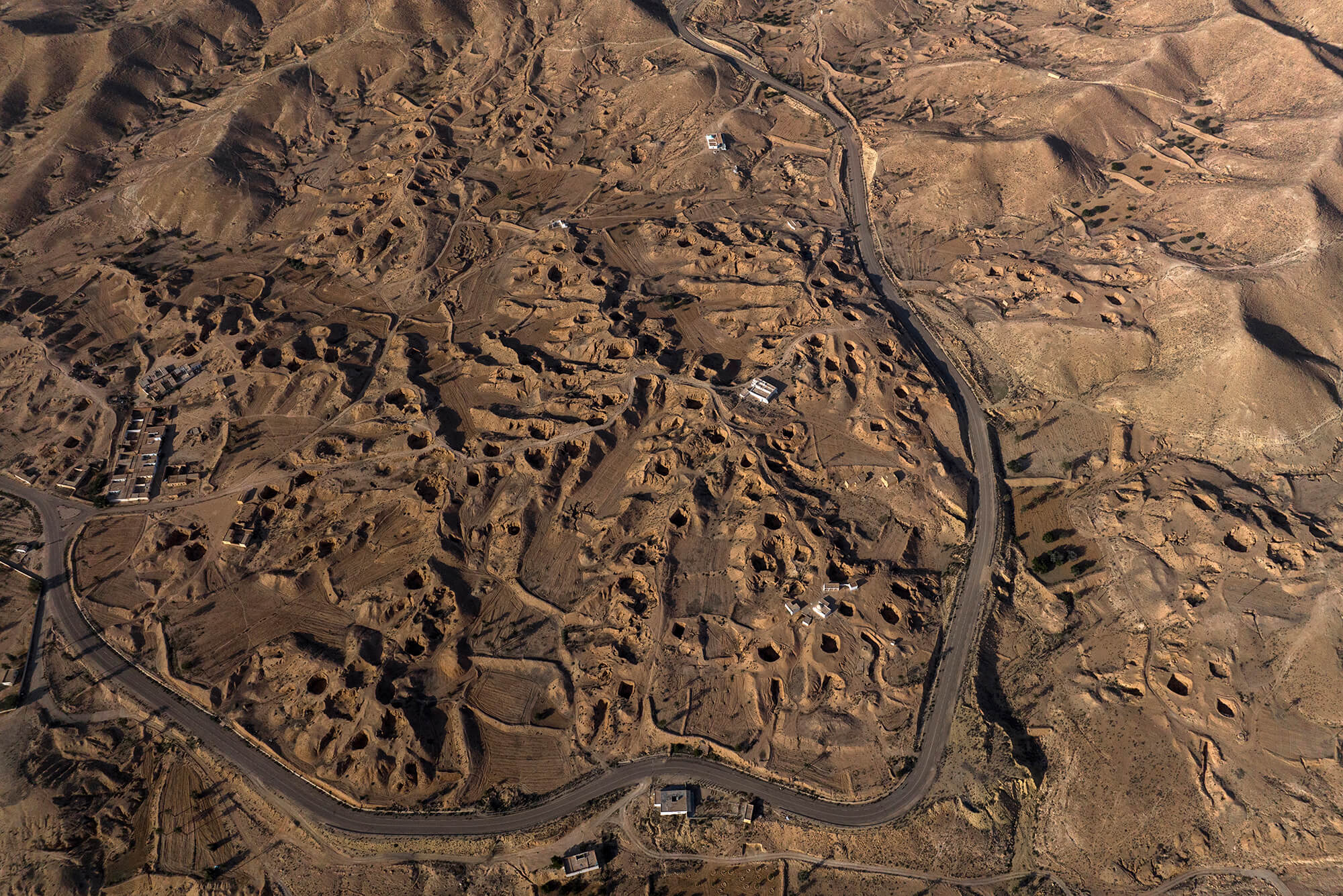
“You could have brought modernity to our traditions, but you can’t do the opposite,” says Ali Kayel, 59, at his empty roadside café, staring out over the moonscape of Haddej, where he was one of more than a thousand people born and raised in the hundreds of cave homes on the valley floor. He remembers how, when he was a child, the smell of food drifted between the caves, which would house two or three families each. People started to move away in the 1970s, and the area has been abandoned since the 1990s. Kayel says that the state never contemplated protecting his way of life, and many of those who moved out of the caves came to regret it.
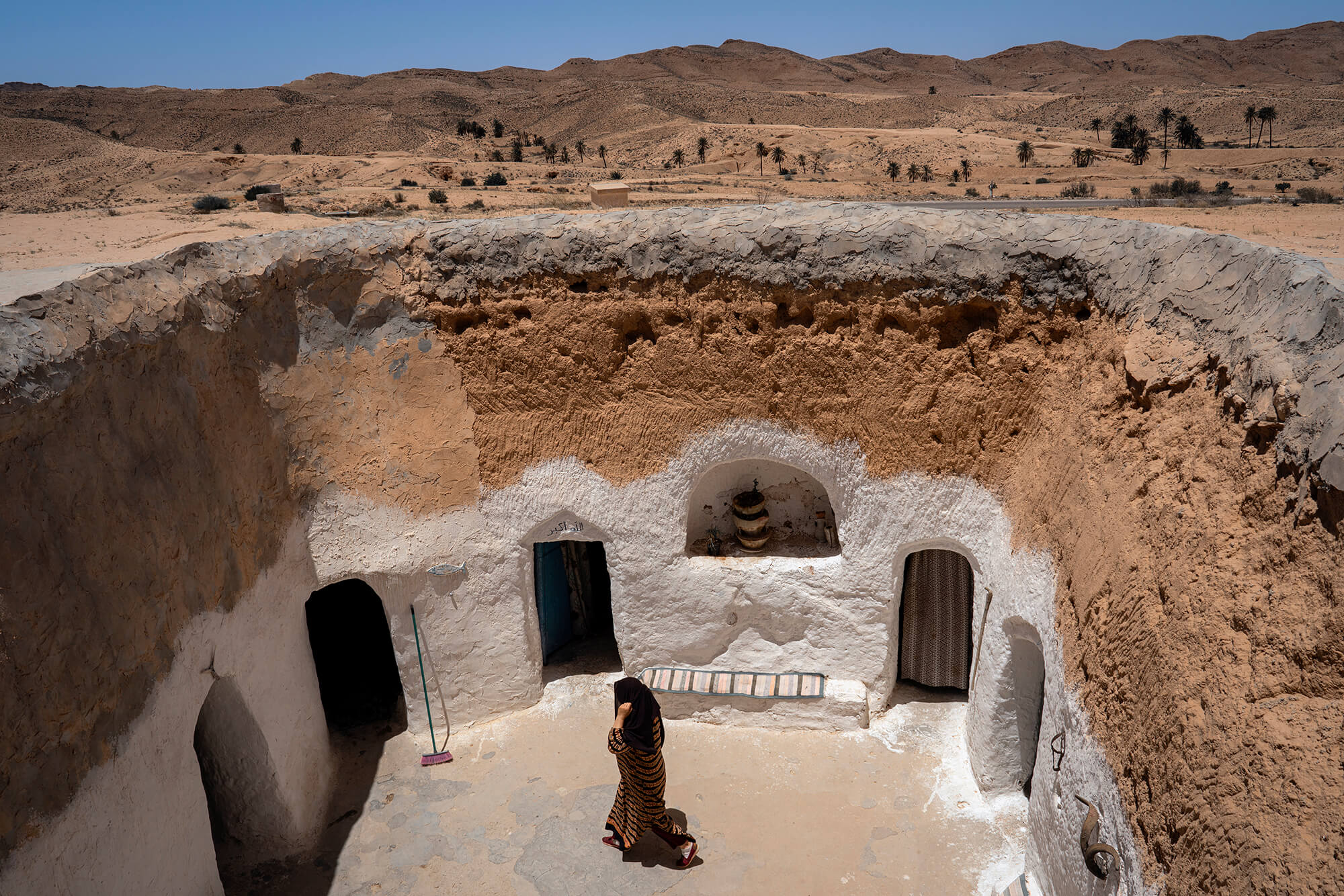
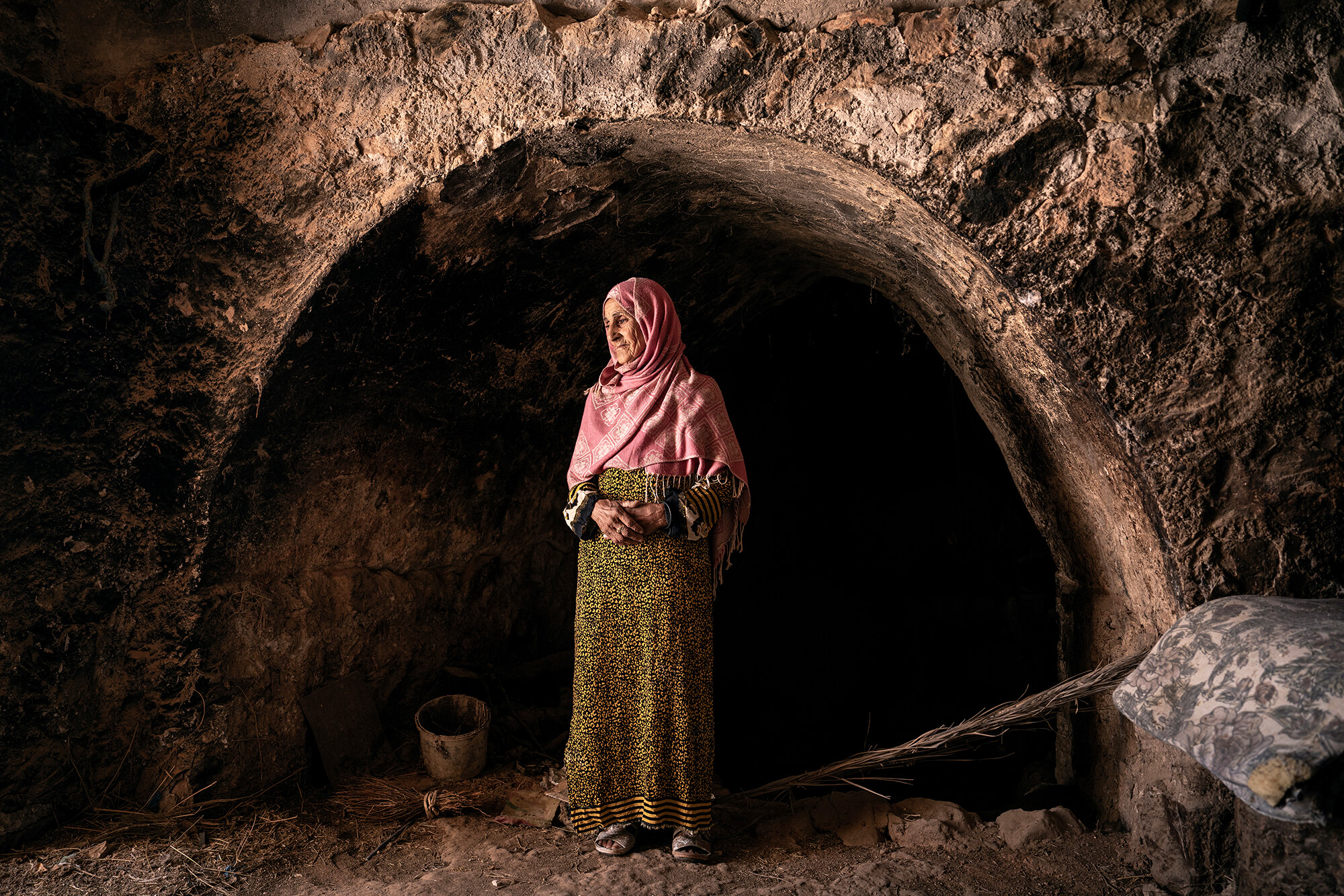
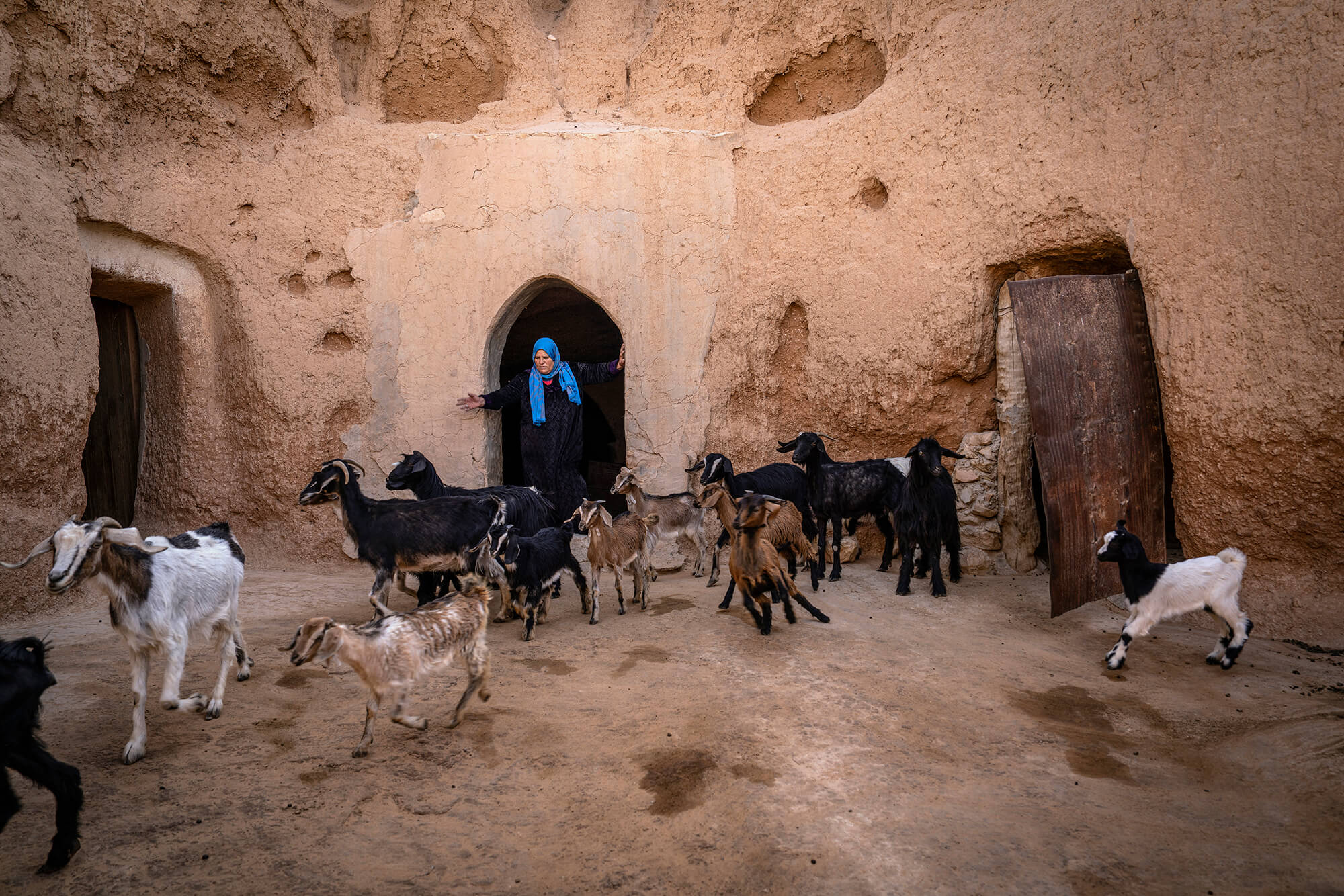
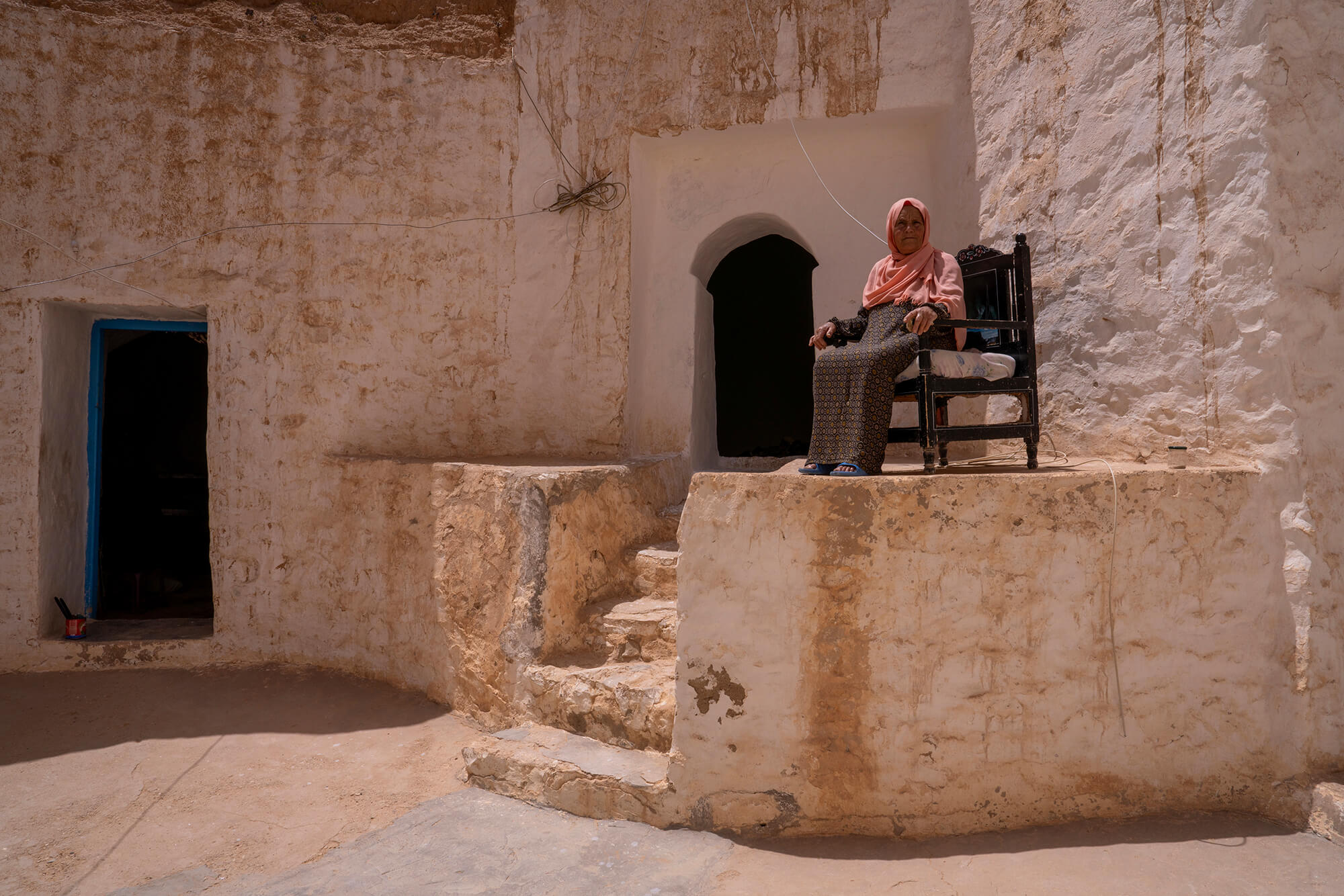
Those who have stayed have found clever ways to meld the benefits of their ancient homes with modern living. Eight miles from New Matmata, the Haamdi family live in five rooms dug deep into the sandstone hillside of Beni Aïssa. Their home, one of just a dozen or so still occupied in the town, is accessed via an aboveground brick foyer that bakes in the Saharan sun, but the living areas beyond are comfortable and cool. A complex system of water channels and walkways, engineered over centuries, connects the two dozen homes pocked across the desert. When it rains, the channels flood gardens of palm, almond, and olive trees.
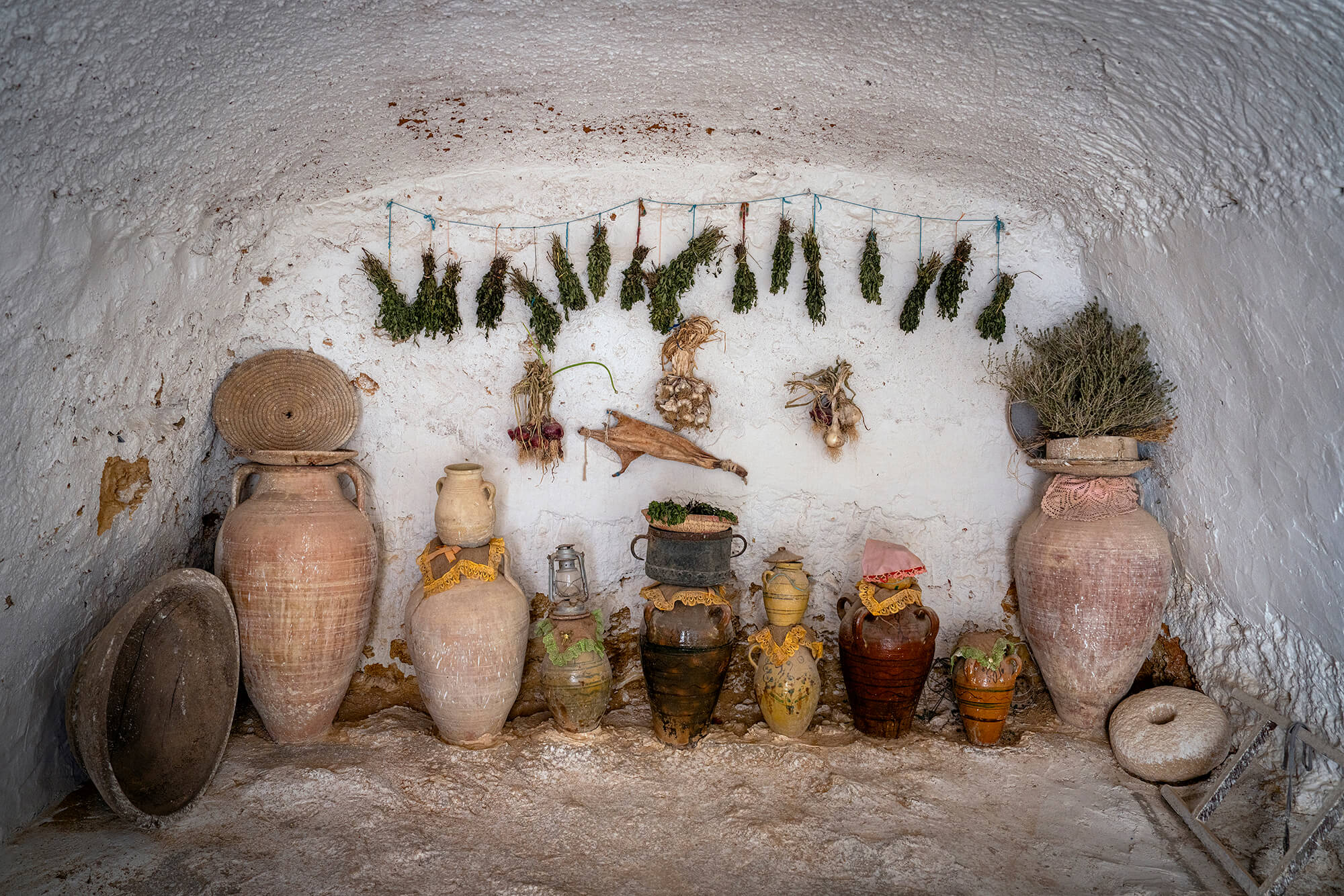
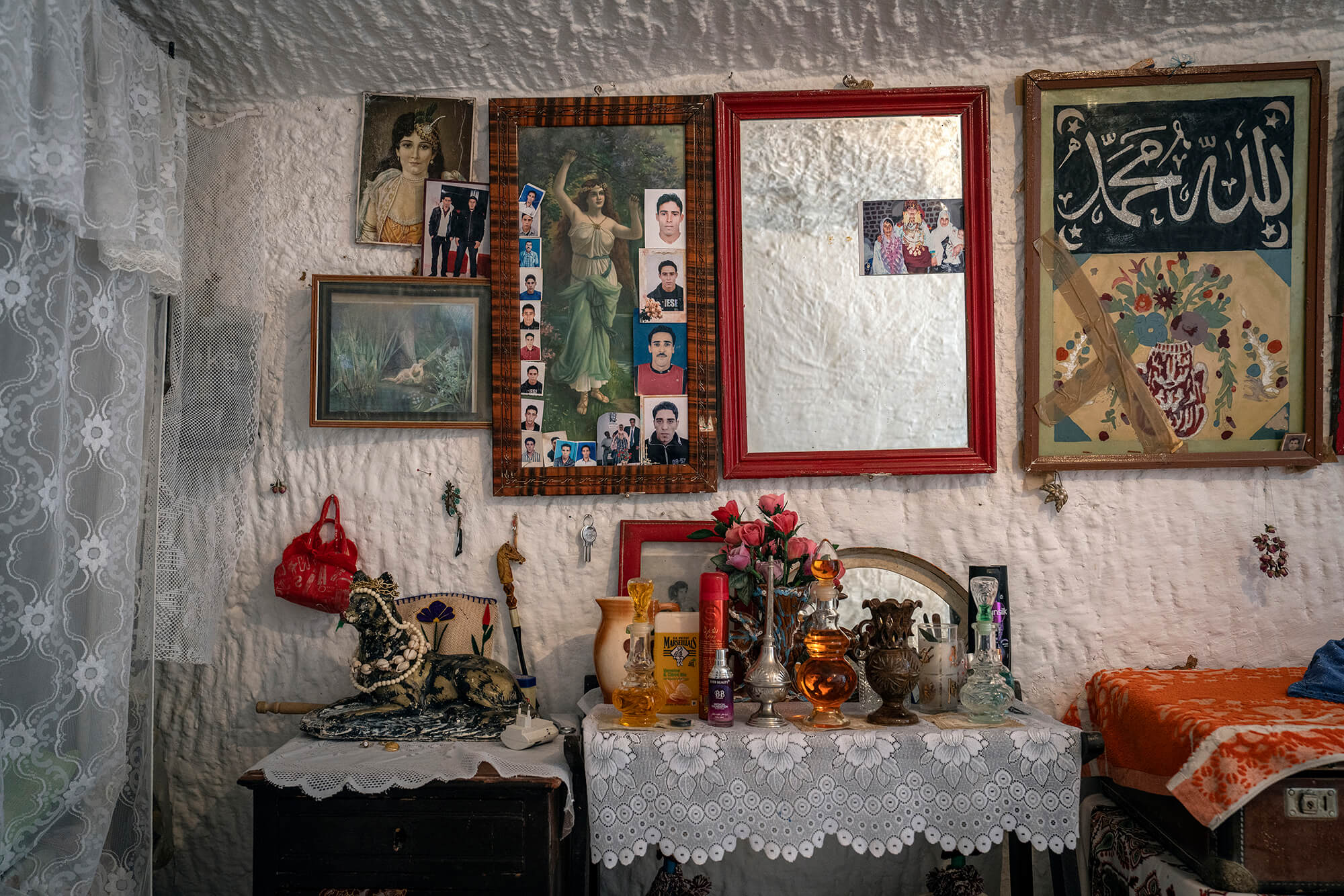
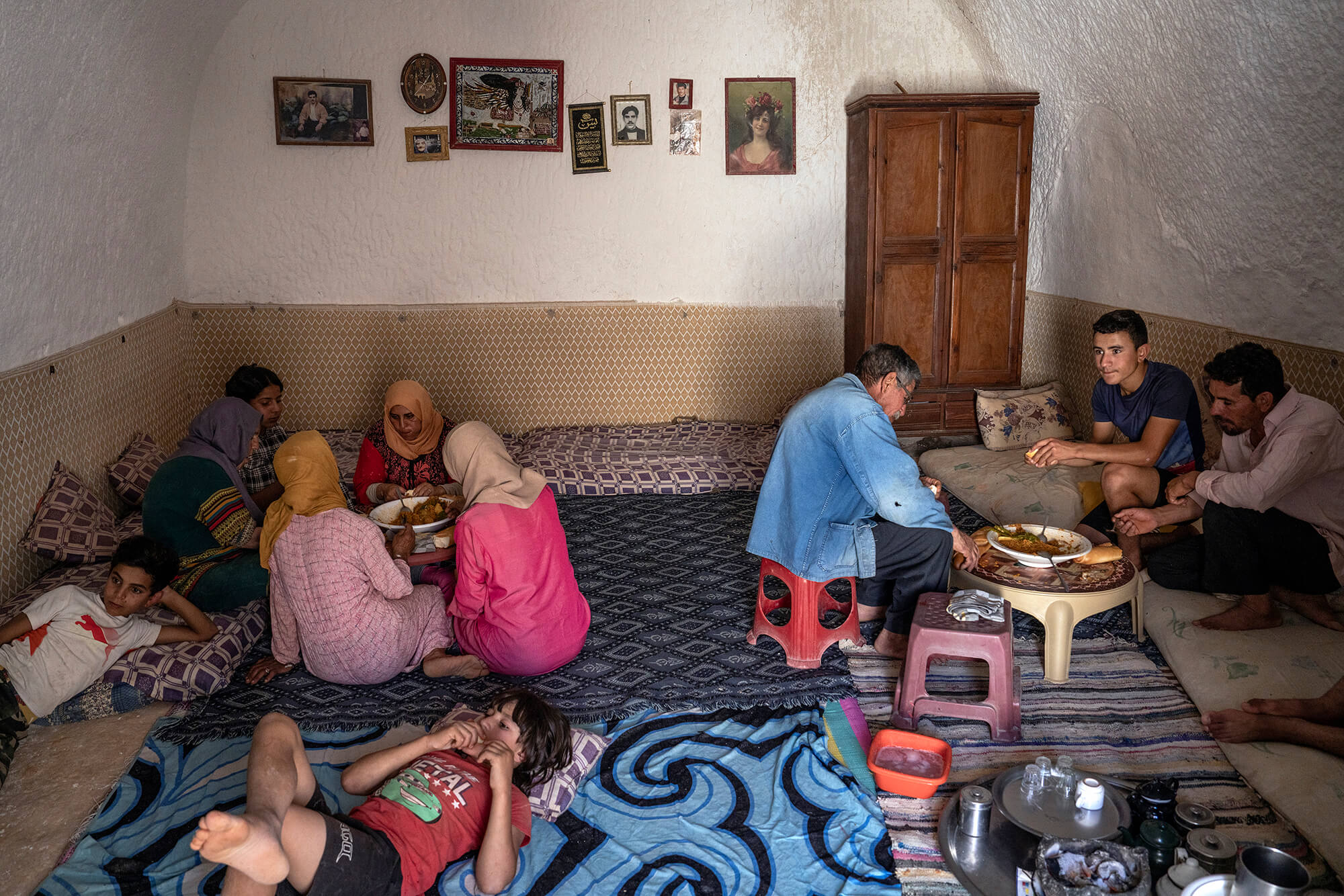
Inside, the Haamdis’ house looks much like any other 21st-century Tunisian home. The walls of a small pantry are adorned with shallots and garlic; the floors in the main living areas are lined with pillows and throw rugs. When eldest son Salem, 20, hooks up his phone to a copper antenna, the cave has patchy internet and Leila, 15, the youngest daughter, can record TikTok videos in a whitewashed storeroom. Grandfather Ali, 73, the family’s oldest member, was born in the cave and has lost count of how many generations came before him. “I will never leave here,” he says. Leila and Salem aren’t thinking of leaving either; they’re making plans to dig further into the porous rock.
Text by John Bartlett.